We spend roughly 90% of our lives indoors – yet we evolved over millennia in direct contact with forests, rivers, open skies, and the rhythms of the natural world. Biophilic design is the discipline of closing that gap.
In This Article

Biophilic design is an approach to architecture and interior design that intentionally incorporates elements of the natural world into built spaces. It sees a building as a living part of its surroundings, not just a sealed box. It connects people inside the building to the outside environment.
This means making homes and work areas bright with natural light. They should have views of plants and the sky. Use real plants, and materials like wood and stone. Include water features, fresh air, and designs that look like nature. It means thinking about how a room smells, sounds, and feels, not just how it looks on a mood board.
Biophilic design isn't a style. It is not a trend, a color palette, or a collection of decorative plants. It is a design philosophy – a way of thinking about the relationship between human beings and the natural systems that sustain them.
In Plain Terms
Biophilic design asks one simple question: how do we make the inside feel more like the outside, in all the ways that matter?
The word biophilic comes from biophilia, a term popularized by Harvard biologist E. O. Wilson in 1984. Wilson suggested that humans naturally feel connected to other living things. He believed this bond with nature comes from our genes and is part of our evolution, not just feelings or culture.
Our ancestors spent a long time looking at nature for food, water, shelter, and safety. Our nervous systems still respond to these things. When we see an open area with some trees and water, it makes us feel calm and safe. But dark and crowded places make us feel stressed. We didn't grow up in big, open offices with bright lights, and our bodies remember this.
Research in environmental psychology, neuroscience, and architecture has spent the past three decades confirming what Wilson suspected. There is strong evidence that being around nature, even in small ways or through simulations, helps improve our health, mood, and thinking skills.
Humans have an innate need to affiliate with other living organisms. That connection isn't a luxury. It's a biological imperative.
– E.O. Wilson, Biophilia (1984)
The health case for biophilic design is one of the most well-supported bodies of research in environmental psychology. Here are some of the most robust findings:
People in spaces designed with nature feel happier, sleep better, have lower blood pressure, and feel more at home. These are not small effects. They compound over the years you spend living inside a building.

Researchers Stephen Kellert and Elizabeth Calabrese organized biophilic design into three overlapping categories. Understanding these helps distinguish genuine biophilic design from superficial greenwashing.
Nature in the Space
Direct interaction with nature means having things like living plants, water, fresh air, natural light, animals, and natural materials in buildings.
Natural Analogues
Indirect representations of nature: organic forms, natural textures, botanical imagery, biomimetic patterns, and materials that evoke natural processes.
Nature of the Space
Spaces that reflect the landscapes where humans grew up include places for looking out and hiding. They mix complexity with simplicity, and they can feel mysterious or risky. These areas often show changes between different zones.
The most powerful biophilic spaces work across all three pillars simultaneously. A living wall is Pillar One. A curved ceiling that echoes the canopy is Pillar Two. A reading nook tucked beneath a low overhang, with a view to the outdoors, is Pillar Three.


Biophilic design exists on a spectrum from the deeply transformative to the quietly impactful. Here is how to think about implementing it at different scales:
Maximize Natural Light
Before adding anything, remove obstacles to daylight. Move furniture away from the windows. Change heavy curtains to light, sheer linen ones. Think about adding skylights or sun tunnels in north-facing rooms. Natural light is the foundation of biophilic design and costs nothing to optimize.
Bring in Living Plants
Plants are the most direct form of nature contact available indoors. Start with hardy species suited to your light conditions – fiddle-leaf figs, pothos, snake plants, monsteras – and scale up from there. Groupings of plants are more effective than isolated specimens.
Use Natural Materials Authentically
Exposed timber, stone, clay plaster, rattan, cork, and linen connect us to natural systems. The key word is "authentic", vinyl wood-look flooring triggers different neurological responses than actual white oak. Where possible, let real materials do the work.
Create Views and Connections to the Outside
Having a view of nature, like a garden, a tree, or the sky, is a powerful way to connect with the outdoors. This can greatly improve our spaces. Design room layouts so that primary seating and workspaces face windows. Consider floor-to-ceiling windows at key moments in the floor plan.
Introduce Water
The sound and movement of water is deeply restorative. A small indoor fountain, a wall-mounted water feature, or even a fish tank can meaningfully shift the sensory character of a room. At a larger scale, water features in courtyards or entry sequences create memorable, calming transitions.
Design for Prospect and Refuge
Humans feel most at ease when they can see out (prospect) while feeling sheltered (refuge).
Create cozy reading spots under low ceilings or stairs. Keep the main living areas open for long views. This tension is what makes spaces feel alive.
Blur the Indoor-Outdoor Boundary
Large sliding or folding doors that open living spaces to decks, patios, or gardens are among the most transformative biophilic interventions available in residential design. When the boundary between inside and outside becomes permeable, the whole character of a home shifts.

At Sustainable 9, we believe that biophilic design and sustainable building are not separate disciplines; they are expressions of the same underlying value: that buildings should serve human life and support the living systems that make that life possible. The connections run deep.
Passive solar design means positioning a house to get sunlight in winter and block heat in summer. It helps the environment and connects people with nature.
Living green roofs insulate the building, manage stormwater, and support urban biodiversity. Cross-ventilation reduces mechanical cooling loads while filling a home with fresh air and natural sound.
Equally important: when people feel a genuine connection to nature through the spaces they inhabit, they tend to make more environmentally responsible choices. Biophilic design doesn't just reduce a building's carbon footprint – it cultivates the disposition to care about one.
Sustainable 9 Perspective
"The most sustainable home is one people love deeply – because they'll take care of it, live lightly in it, and never want to demolish it."

Minneapolis is a city with a deeply conflicting relationship to nature. Our summers are extravagant – long light, warm lakes, and lush tree canopy. Our winters are severe.
In the Midwest, biophilic design faces a challenge. It's tough to stay connected to nature during six months of cold, dark, and snow.
This is the design problem we find most interesting. It requires thinking carefully about south-facing windows that maximizes outdoor views and winter light. About thermal mass that holds heat. About indoor gardens and plant-filled solaria that keep green alive when the ground is frozen. About materials – cedar, birch, local stone – that carry the memory of the regional landscape indoors.
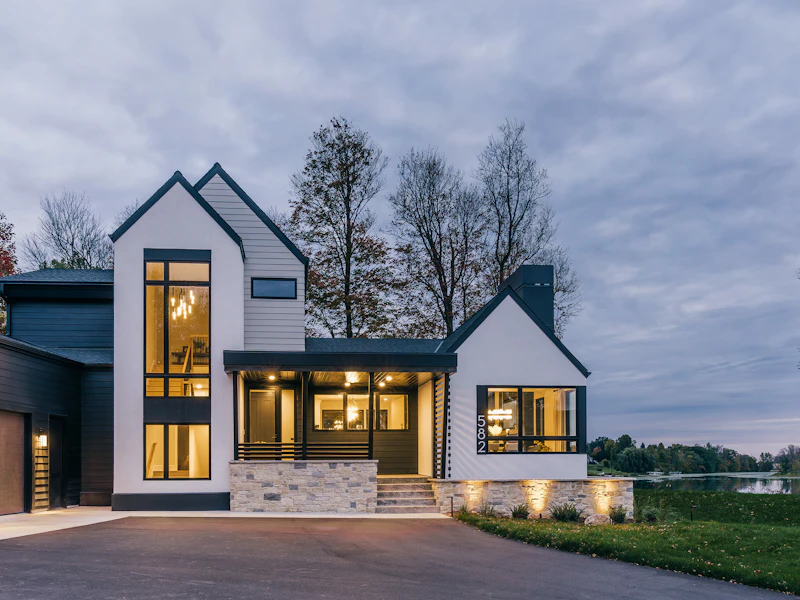
The Theodore Wirth Residence is built on a steep hill next to the biggest public park in Minneapolis. It serves as an example of this method.
The home engages the site's natural topography rather than flattening it. Every primary living space has direct visual connection to the outdoors and wooded park beyond. The path from the street to the door to the living room is designed to feel like a walk in nature.
This is what we mean when we say we build forward-thinking custom homes. Not just homes that use less energy, homes that use design to give people what they need.