Minnesota's brutal winters, abundant forests, and 10,000 lakes make it one of America's most demanding and most promising laboratories for sustainable architecture. From the North Loop's mass timber towers to Saint Paul's net-zero affordable housing, the Land of 10,000 Lakes is building a greener future one cold-climate innovation at a time.
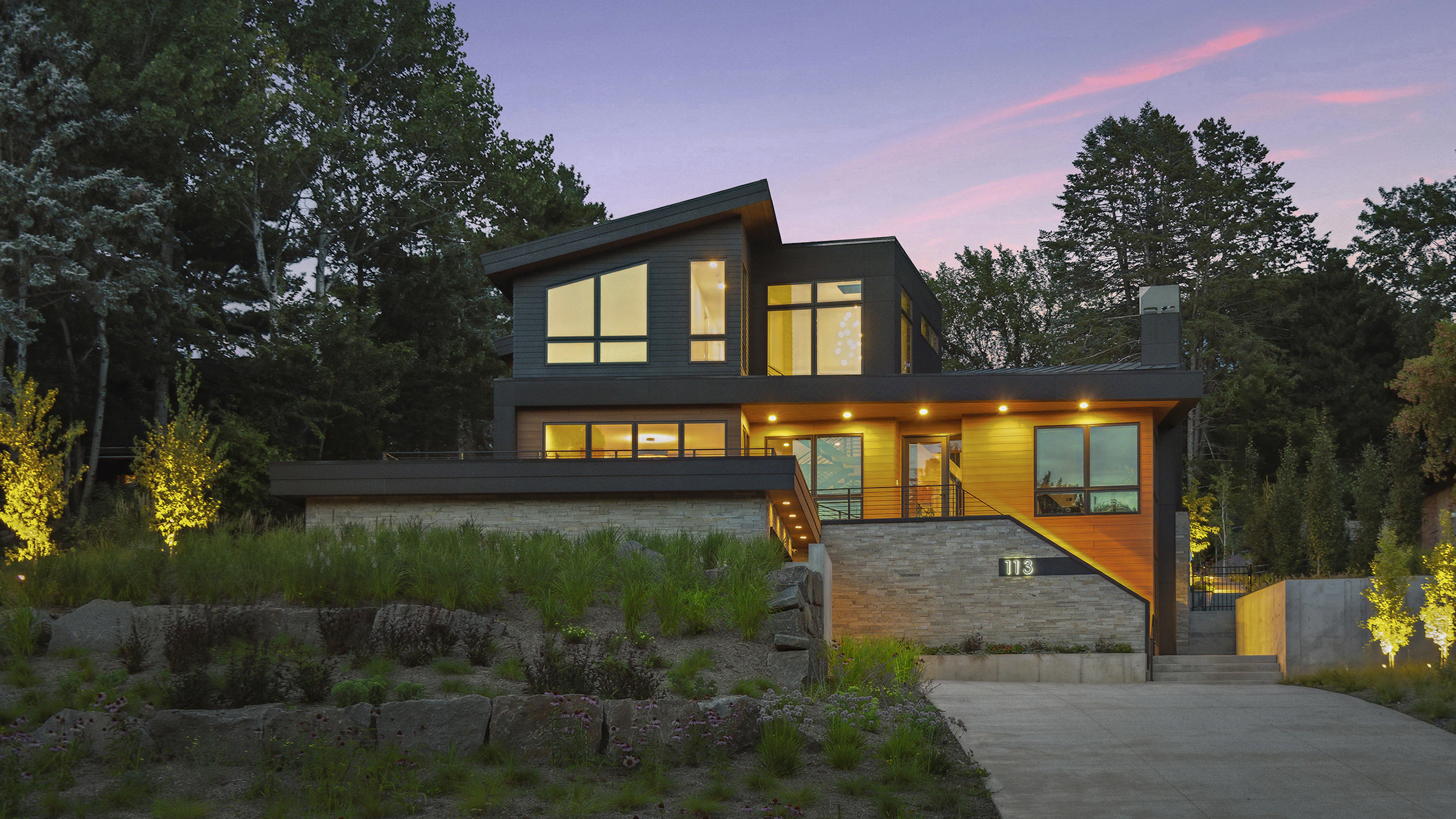
Building sustainably anywhere is hard. Building sustainably in Minnesota is a masterclass. The state endures some of the most punishing thermal extremes in the continental United States: temperatures that plunge to -30°F in January and climb past 90°F in July, a swing of more than 120 degrees within a single calendar year. Every wall assembly, every window specification, every mechanical system must perform across that entire brutal range.
For decades, Minnesota architects responded with brute force: thicker insulation, more powerful furnaces, buildings sealed tight against the cold. But a new generation of designers is asking a deeper question.
What if the climate itself could be a design partner rather than an adversary? What if Minnesota's long winters, abundant sunlight, rich North Woods timber, and 10,000 glacially carved lakes were assets rather than obstacles?
Minnesota's B3 Guidelines, the Buildings, Benchmarks, and Beyond sustainability framework, require all state-funded construction to achieve at least 30% better energy performance than code minimum. They are among the most rigorous mandatory sustainability standards of any state in the country, and they are reshaping how Minnesota builds.
Cold Climate, Warm Ambition
The Twin Cities metro now counts over 150 LEED-certified buildings. Minneapolis has committed to an 80% reduction in citywide greenhouse gas emissions by 2050. Saint Paul adopted its Climate Action and Resilience Plan, with building performance standards at its core. Duluth, already grappling with Lake Superior flooding and permafrost shifts further north, is rewriting its waterfront with climate resilience baked into every foundation.
What makes Minnesota's green building story particularly compelling is that it is not driven by mild weather making sustainability easy. It is driven by the hard-won understanding that in a heating-dominated climate, energy efficiency is not an environmental virtue: it is an economic necessity. A super-insulated building in Minneapolis pays back faster than almost anywhere in America.
In Minnesota, the case for sustainable architecture was never philosophical: it was practical. When your heating bill runs nine months a year, the envelope is everything."
– Minnesota Center for Sustainable Building Research
When the T3 building rose in Minneapolis's North Loop neighborhood in 2016, it made history as the first modern mass timber office building in the United States. Seven stories of cross-laminated timber, designed by Michael Green Architecture and DLR Group, announced that Minnesota wasn't just adopting a global trend: it was defining it.
Mass timber is a natural fit for Minnesota. The state's North Woods forests supply sustainably harvested timber, CLT sequesters carbon rather than emitting it, and prefabricated panels assemble quickly even through shoulder-season weather. The exposed grain of Minnesota white pine and spruce creates warm interiors that resonate with the state's deep connection to its forested landscape.
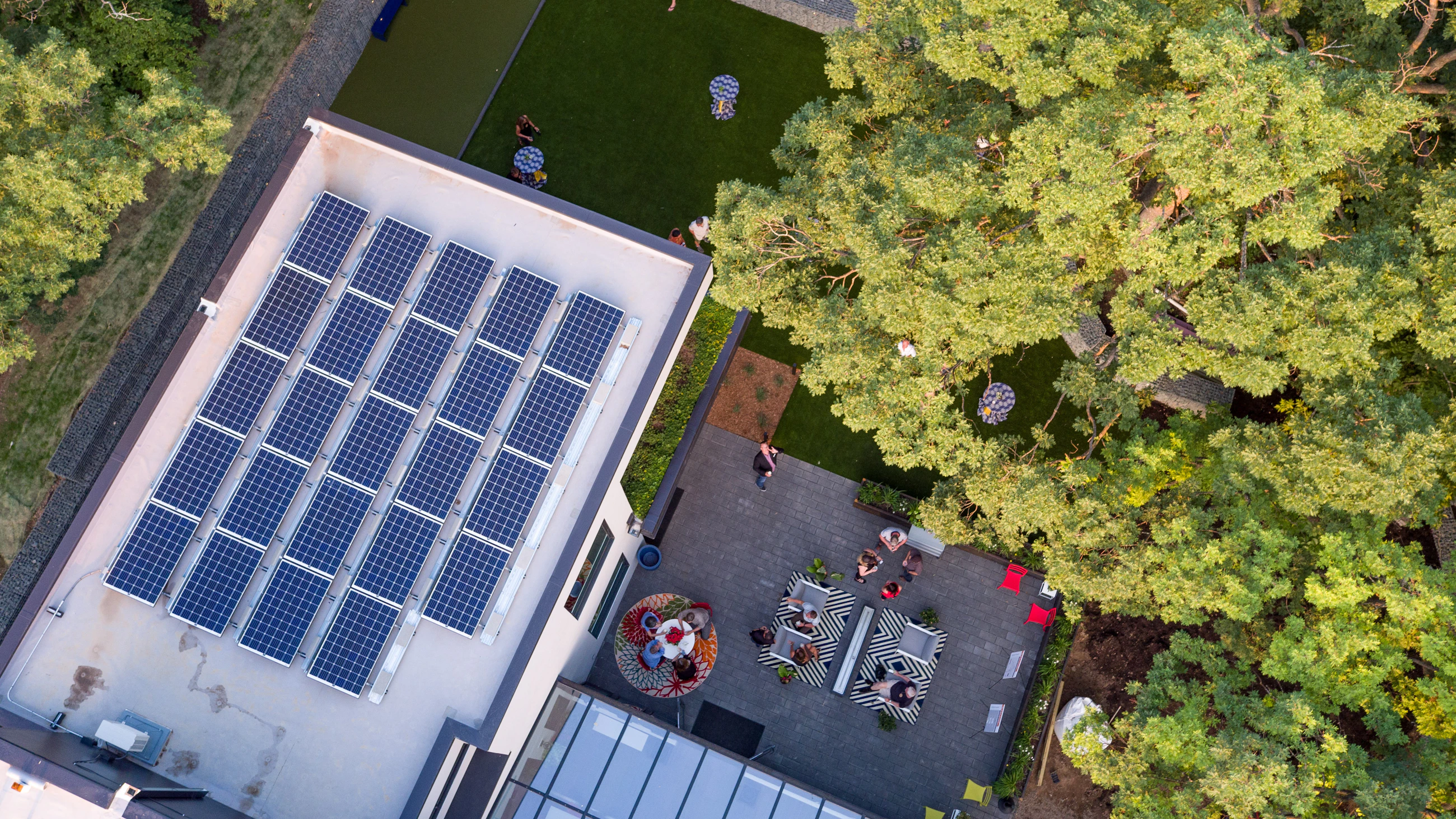
Minnesota's solar story surprises almost everyone who hears it. Even though the state is known for grey winters and very cold weather, it gets more sunlight each year than Germany, which is the country that created the modern solar industry. Cold temperatures actually increase solar efficiency by 10 to 25% compared to hot summer days, and Minnesota's dry, clear winter air maximizes panel output.
Xcel Energy's Solar Rewards program and Minnesota's pioneering Community Solar Garden model, the first in the nation when launched in 2013, have made solar accessible to homeowners, renters, and businesses statewide. Green roofs and building-integrated solar panels are now appearing across the Twin Cities skyline.
Minnesota winters have produced some of North America's most sophisticated building envelope science. In Minnesota, many new buildings now use super-insulated walls with R-40+ values. They also have triple-pane windows with warm-edge spacers. These buildings are tested for airtightness and have heat recovery ventilation (HRV) systems. The result: buildings that hold warmth with minimal mechanical input.
Minnesota's geology, with its stable bedrock and abundant groundwater, also makes it ideal for geothermal heat pump systems. Projects like the Rowan Apartments in Saint Paul demonstrate that geothermal combined with solar and high-performance envelopes can achieve net-zero energy even in affordable housing at Minnesota scale.

Minnesota's next chapter will be written in its buildings. The state's goal for carbon-free electricity by 2040 is big. However, the buildings linked to this grid play a key role in making this goal possible. A state full of energy-hungry, thermally leaky buildings will overwhelm any clean grid. A state of high-performance envelopes will make the target attainable years ahead of schedule.
The good news is that Minnesota already has the ingredients: proven cold-climate building science, a thriving timber industry, among the nation's best solar access per capita, bold municipal climate commitments, and an established network of architects, developers, and contractors who have built some of the most innovative sustainable buildings in North America.
What the state needs now is scale. Every new school, every apartment building, every commercial renovation is a decision point. The materials exist. The policy framework is in place. The only question is whether Minnesota's builders will reach for what is possible, not merely what is required.
Minnesota has always been shaped by its winters. Generations of builders, farmers, and engineers learned to work with the cold rather than fight it. That same pragmatic ingenuity is now the state's greatest asset in the transition to sustainable construction.
Firms like HGA, Cuningham Group, and DLR Group are demonstrating every year that ambitious sustainability and Minnesota practicality are not in conflict: they are one and the same. Net-zero buildings in Minnesota are not a California import. They are a natural expression of a state that learned long ago to respect its environment.
At Sustainable 9, we believe Minnesota's built environment is on the verge of a genuine transformation. The T3 building was not an anomaly. It was a signal. The Rowan Apartments were not a demonstration project. They were a template.
The future of Minnesota is being built right now: in timber frames rising over the North Loop, in net-zero apartments anchoring transit corridors, in Duluth's waterfront rebuilt to outlast a changing Lake Superior. The tools are here. The talent is here. All that remains is the architectural courage to use them.