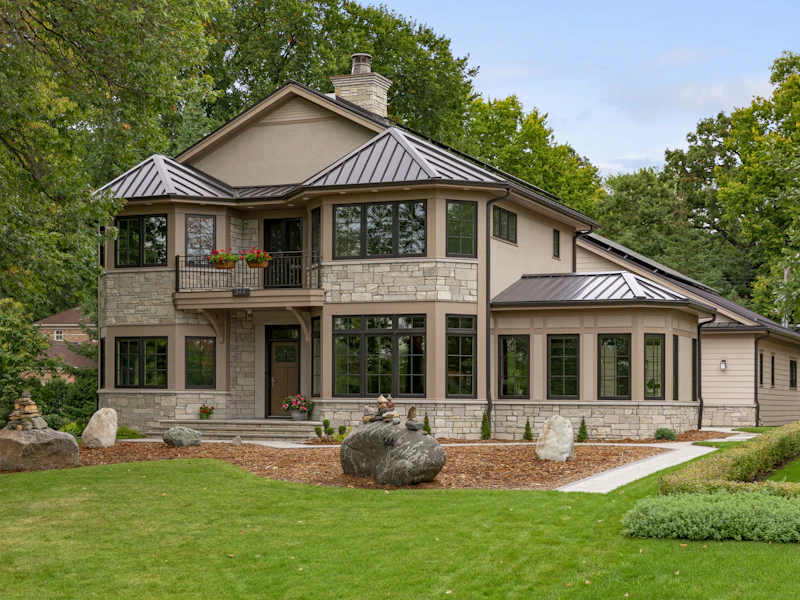
Your front door is more than just a transition point between the outside world and your living space—it is the ultimate architectural handshake. For a high-performance, custom home, the entry serves as a focal point that merges sustainable materials with distinctive personal style.
As we move through 2026, entry design is shifting. Homeowners are balancing high-value architectural traditions with expressive palette choices to create warm, inviting, and highly sustainable first impressions.
Color trends for front doors have evolved past standard builder-grade primaries. Current palettes reflect a deeper connection to nature, alongside a conscious movement toward long-term real estate value and individual expression.
Warm Earthy Neutrals
A massive macroeconomic shift in home design is the move toward organic warmth. Homeowners are stepping away from stark whites and cool grays, opting instead for clay, taupe, and rich beige. These hues harmonize beautifully with eco-friendly exterior finishes like natural cedar siding, architectural steel, and reclaimed stone.
Biophilic Woodland Greens
Driven by the desire for biophilic design—integrating nature directly into building practices—deep greens inspired by woodland landscapes are highly popular. These muted, complex greens allow an entryway to recede naturally into surrounding landscaping while still offering a distinct sense of luxury.
Timeless High-Resale Classics
While experimentation is rising, data continues to favor traditional, high-contrast entryways for absolute market longevity. Classic black and navy blue remain top choices for their timeless appeal and exceptionally high resale value. Additionally, designers are introducing muted, inky tones—charcoals with blue undertones or near-black indigos—which offer a contemporary twist on classic preservation.
Individualistic Statements
For those looking to break the mold, 2026 is seeing a surge in intentional, high-character design. Homeowners are increasingly experimenting with bold statement colors like burgundy or mustard to express individuality. When applied to high-quality, responsibly sourced wood or insulated steel doors, these colors turn the entry into an curated piece of standalone art.
The perfect front door requires a precise marriage between color choice and structural form. At Sustainable 9, we believe style must always follow high-performance function.

Choosing your color is only half the battle. To ensure your entry aligns with modern green building standards, consider how the door is manufactured, finished, and sealed.
1. Select an Energy-Efficient Core: Pre-construction phase
Look for doors with an insulated polyurethane or solid FSC-certified wood core. A high-performing thermal boundary at your front door reduces thermal bridging and lowers annual heating and cooling demands.
2. Prioritize Low-VOC or Zero-VOC Paints: Finishing phase
Whether you choose a deep woodland green or a classic navy blue, ensure the paint formulation is Low-VOC (Volatile Organic Compounds). This protects local air quality and ensures the exterior coating is as eco-friendly as the structure beneath it.
3. Optimize Tight Weatherstripping: Installation phase
An entry door is only as good as its perimeter seal. Install heavy-duty, durable gaskets and a precision-engineered drop-seal threshold to maintain your home’s airtight envelope and prevent drafts.
Ultimately, choosing the right front door color and structural style for you home is an exercise in balancing timeless architectural value with personal expression. Whether opting for the grounding presence of warm earthy neutrals, the biophilic connection of deep woodland greens, or a courageous pop of burgundy, the visual choices we make must remain deeply intertwined with performance.
At Sustainable 9, we believe that an entrance should not only captivate through its design but also stand as a testament to eco-friendly excellence—marrying premium aesthetics with high-performance insulation, low-VOC materials, and structural integrity that protects both your home and the planet for generations to come.