When people think about a healthy home, the conversation often starts with low-VOC paint, non-toxic cleaners and regular cleaning. These choices can reduce exposure to certain pollutants, but indoor air quality is shaped by much more than the products brought into a home.
A healthier home starts with the building itself: how it is designed, how it manages moisture, how it exchanges air and how materials and mechanical systems work together.
At Sustainable 9, we approach indoor air quality as part of a larger building-science strategy. The goal is not simply to reduce pollutants, but to design a home that controls their sources, manages moisture and continuously brings in fresh air.

Energy-efficient homes rely on a well-sealed building envelope to reduce unwanted air leakage. In Minnesota, where heating demands are significant during the winter, this approach can improve comfort, reduce energy use and make heating and cooling systems more efficient.
But a tighter home also changes how air moves through the building.
In an older or leaky home, outdoor air may enter through gaps in the building envelope. While uncontrolled air leakage is inefficient, it can provide some incidental ventilation. In a well-sealed home, that air exchange is significantly reduced. Without a dedicated ventilation strategy, indoor pollutants can accumulate.
Common sources include VOCs from building materials and furnishings, combustion byproducts, cooking emissions, cleaning products, dust and biological contaminants. The EPA notes that concentrations of some indoor pollutants can be two to five times higher than typical outdoor concentrations.
The solution is not to compromise on energy efficiency. It is to pair an efficient building envelope with intentional ventilation and source control.

Good indoor air quality depends on more than opening a window when a room feels stuffy. A healthy home should have a deliberate strategy for removing stale air and introducing filtered outdoor air.
This is particularly important in Minnesota, where opening windows for extended periods is not practical during much of the heating season.
How HRVs and ERVs Support Indoor Air Quality
Heat Recovery Ventilators (HRVs) and Energy Recovery Ventilators (ERVs) are designed to provide continuous ventilation while minimizing the energy penalty associated with bringing outdoor air into the home.
An HRV transfers heat between outgoing and incoming air streams. In winter, for example, heat from the home's outgoing air is transferred to the incoming cold air, helping maintain indoor comfort while providing fresh air.
An ERV performs a similar function while also transferring a portion of the moisture between the two air streams. This can help manage indoor humidity and maintain more consistent conditions throughout the year.
For high-performance homes, ventilation should be considered during the design process rather than added as an afterthought.
Your HVAC System Plays a Role, Too
Heating and cooling are only part of what a well-designed HVAC system does. Proper filtration can help capture airborne particles such as dust and pollen, while regular maintenance keeps the system operating as intended.
Filter selection also matters. The right filter depends on the equipment and the home's ventilation strategy. A filter that is too restrictive for a particular system can reduce airflow and affect performance.
For that reason, filtration, ventilation and HVAC design should be considered together rather than as separate systems.

Moisture is one of the most important factors in maintaining a healthy home. Persistent moisture can contribute to mold growth, damage building materials and create conditions that affect indoor air quality.
Moisture control begins before anyone moves into the home.
Start with the Foundation and Building Envelope
A durable moisture-management strategy includes proper site drainage, foundation waterproofing, perimeter drainage and appropriate vapor and air-control layers.
The objective is straightforward: keep bulk water out, manage water vapor and provide a path for any incidental moisture to dry.
At the foundation, that can mean directing water away from the structure, maintaining effective drainage and protecting below-grade spaces from groundwater. The EPA identifies moisture control as a key component of mold prevention and recommends keeping indoor relative humidity ideally between 30% and 50%.
Manage Humidity Indoors
Minnesota homes experience two very different humidity challenges throughout the year.
Summer can bring elevated humidity, while winter's cold, dry outdoor air can significantly lower indoor humidity. Mechanical systems, including air conditioning, dehumidification and humidification, can help maintain appropriate conditions.
A simple hygrometer can provide an ongoing view of indoor humidity. Condensation on windows or other cold surfaces can also be an early indication that moisture levels need attention.

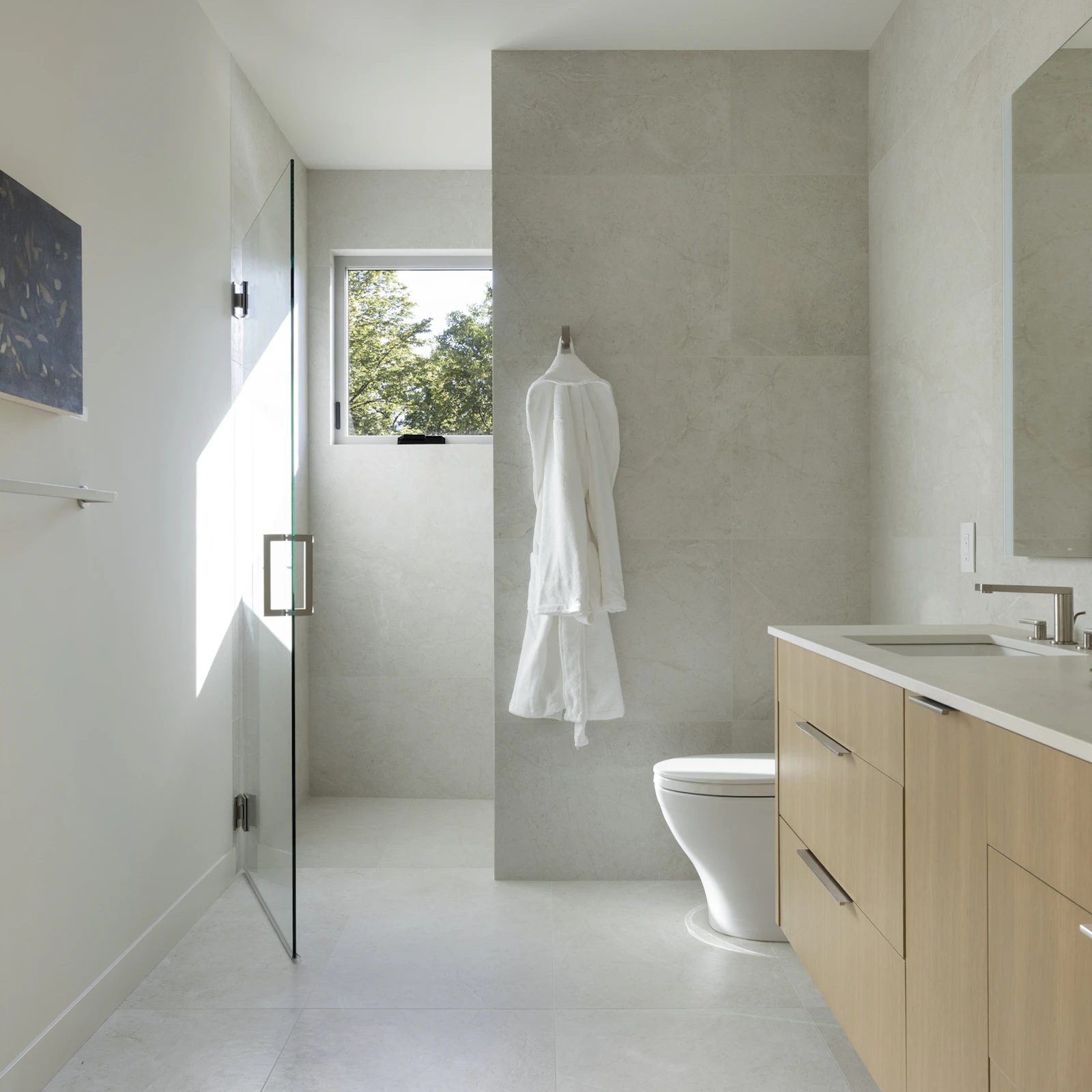
Bathrooms and kitchens generate significant amounts of moisture and airborne pollutants. The most effective approach is to remove them at the source.
Bathroom exhaust fans should vent outdoors and run during and after showers to remove moisture before it can migrate into other parts of the home.
Kitchen ventilation is equally important. A properly sized and installed range hood can capture cooking-related moisture, smoke, grease and other airborne byproducts before they circulate throughout the home.
These systems may seem simple, but their placement, sizing and duct design are important parts of overall indoor air quality.
Material selection is another important part of a healthy home.
Low-and no-VOC materials can help reduce emissions from finishes, adhesives, sealants and other products. But VOC content is only one consideration. A more comprehensive approach looks at the materials that make up the entire interior environment, including cabinetry, flooring, insulation, furnishings and composite wood products.
Source control is one of the EPA's primary strategies for improving indoor air quality: reduce or eliminate pollutants where possible, then use ventilation and filtration to manage what remains.
Third-party certifications can also help homeowners evaluate products based on established environmental and health criteria. Depending on the material, certifications such as FSC, Greengaurd, FloorScore, and other product-specific standards can provide additional information about sourcing and emissions.
The goal is not to eliminate every synthetic material from a home. It is to make informed decisions about what materials are used, where they are used and how they perform over the life of the home.

Indoor air quality is not the result of a single product or system. It is the result of decisions made throughout the design and construction process.
A well-designed home considers the building envelope, ventilation, HVAC, moisture management, material selection and filtration as interconnected parts of the same system.
For Minnesota homes, that approach is especially important. A home needs to perform through cold winters, humid summers and significant seasonal changes without sacrificing comfort or indoor air quality.
At Sustainable 9, we believe healthier homes begin with thoughtful design and building science. When energy efficiency, durability, material health and indoor air quality are considered together, the result is a home designed not only to use less energy, but to support the people living inside it.
Ready to build a home where design, comfort, and performance work together? Let’s connect.
Peter Chambers has spent over 5 years as Associate Editor at Renovated, exploring how sustainable choices enhance both home value and quality of life. He believes the most effective eco-friendly upgrades are the ones you'll actually stick with, and focuses on helping readers adopt sustainable practices that feel natural, save money, and create healthier living spaces.